

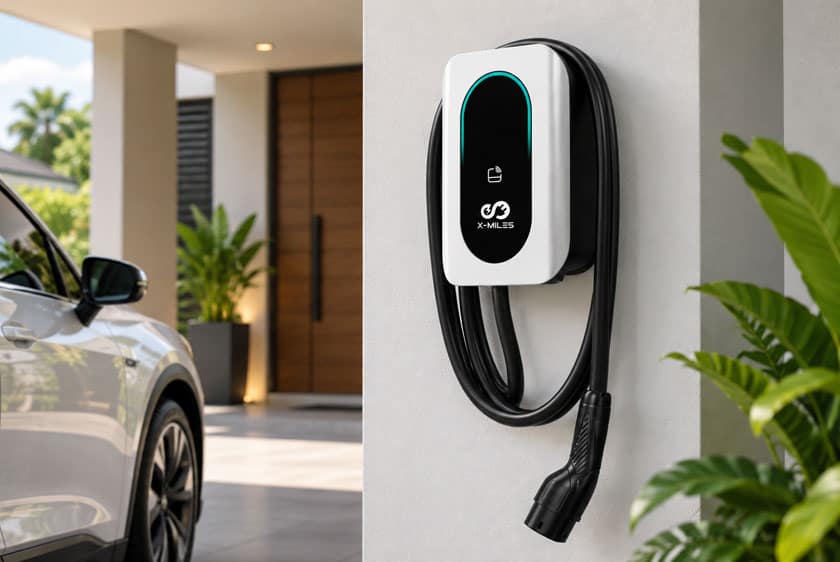
Choosing a home EV charger is easier when three limits are understood: the power available from the home, the maximum AC charging rate accepted by the vehicle and the amount of energy the driver needs to replace each day. The charger can only operate within the lowest of these limits.
X-MILES home charging solutions include 7kW single-phase, 11kW three-phase and 22kW three-phase options. Each can be appropriate in the right situation. Selecting the largest number without checking the vehicle and property may add cost without making charging faster.
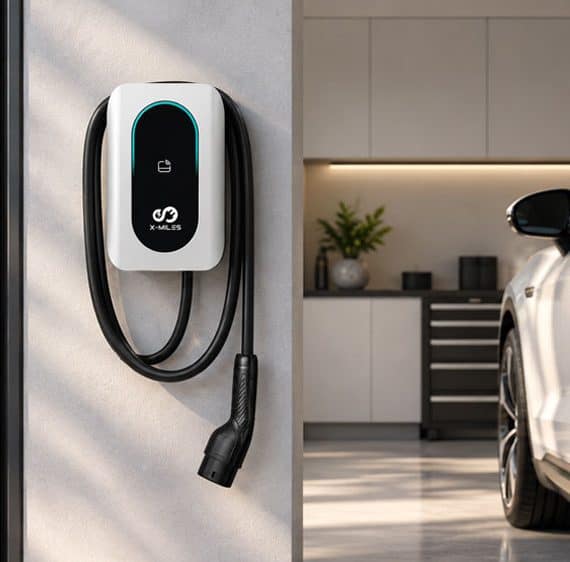
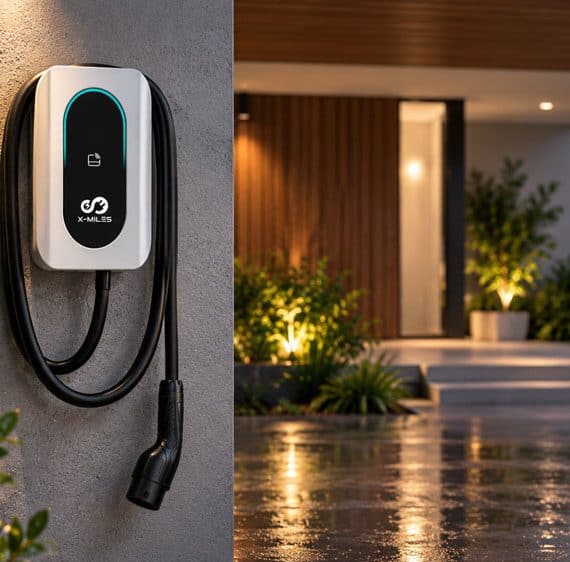
When a 7kW home charger is suitable
A 7kW charger is a practical choice for many landed homes with a suitable single-phase supply. It can replenish a significant amount of energy during an overnight parking period and is often sufficient for normal daily commuting.
It may also be the correct choice when the vehicle’s onboard AC charger is limited to approximately 7kW. In that situation, installing an 11kW or 22kW unit will not allow the vehicle to exceed its own charging limit.
When an 11kW home charger is suitable
An 11kW charger normally requires a suitable three-phase supply and a vehicle that can accept 11kW AC charging. It offers a useful balance for households that want faster charging without necessarily requiring the full capacity associated with a 22kW charger.
This option may suit drivers with larger batteries, higher daily mileage or shorter overnight charging windows. The electrical assessment must still confirm that the property can support the additional continuous load.
When a 22kW home charger is suitable
A 22kW charger requires a suitable three-phase installation and is most beneficial when the vehicle can accept high-rate AC charging. Many EVs cannot accept 22kW AC, so the vehicle specification must be checked before this option is selected.
A 22kW-capable charger may also be selected for future flexibility, but the owner should understand that current charging speed will remain limited by the connected vehicle and available supply.
Charging time cannot be guaranteed by charger power alone
Actual charging time depends on battery capacity, starting state of charge, the vehicle’s onboard charger, charging losses, temperature and battery-management behaviour. Charging may also slow as the battery approaches a high state of charge.
For this reason, a professional recommendation should be based on the driver’s real routine. Many owners do not need to charge from empty to full every night; they only need to replace the energy used during the day.
Do not overlook safety and smart features
The selected charger should be installed on a dedicated circuit with suitable wiring, earthing, isolation and protection. X-MILES EV smart XMT-EVL008 options include Type 2 charging, app and RFID operating modes, connectivity options and safety protection designed for home EV charging. The complete installation must still be assessed and carried out professionally.
Frequently asked questions
Will a 22kW charger charge every EV at 22kW?
No. The vehicle’s onboard AC charger may limit charging to 7kW or 11kW even when a 22kW charger is connected.
Is three-phase power required for 11kW and 22kW charging?
These ratings normally require a suitable three-phase supply. The site’s actual capacity and installation condition must be checked.
Which charger is best for most daily commuters?
The best choice depends on daily mileage, parking duration, vehicle capability and home electrical capacity. A 7kW charger is sufficient for many users, but it should not be selected without checking these factors.


